S
Structured potential state
A trace x opens a declared structured space 𝓜ₓ of possible actualizations and induces an explicit structured potential 𝒫₀ over that space. An arbitrary hidden representation is not sufficient.
Our thesis is that intelligence should not be reduced to a direct mapping from input to output, nor to the manipulation of representations whose potential structure remains implicit, but understood as a process of contextual actualization: the transformation of possible meanings into differentially stabilized actualizations under contextual constraints.
This intuition follows directly from the dynamic approach to polysemy developed by Bernard Victorri and Catherine Fuchs, then extended notably by Fabienne Venant in La construction du sens : un système complexe dynamique (2007). In this approach, linguistic meaning is treated as a continuum and meanings are represented not as isolated points, but as regions.
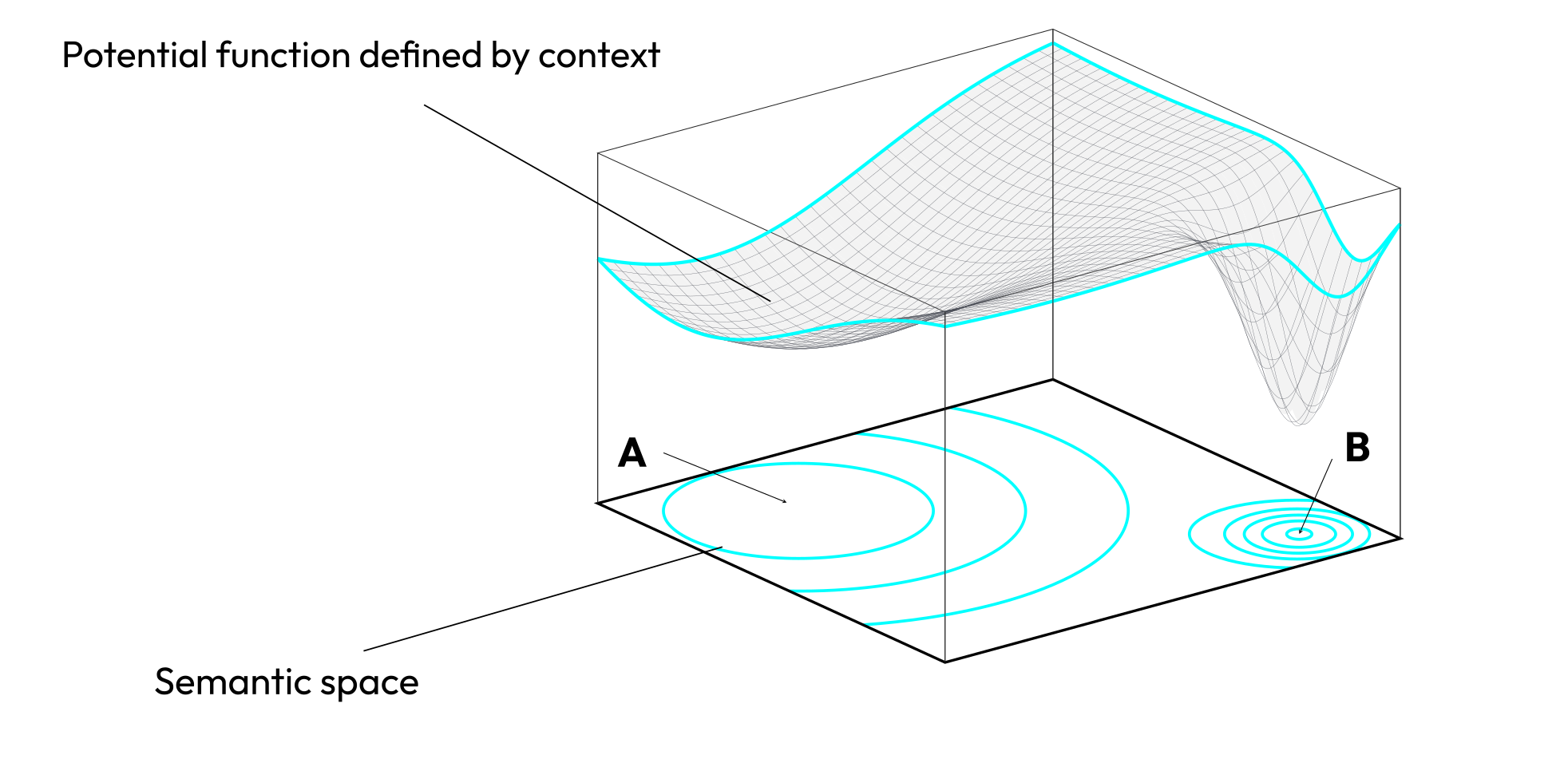
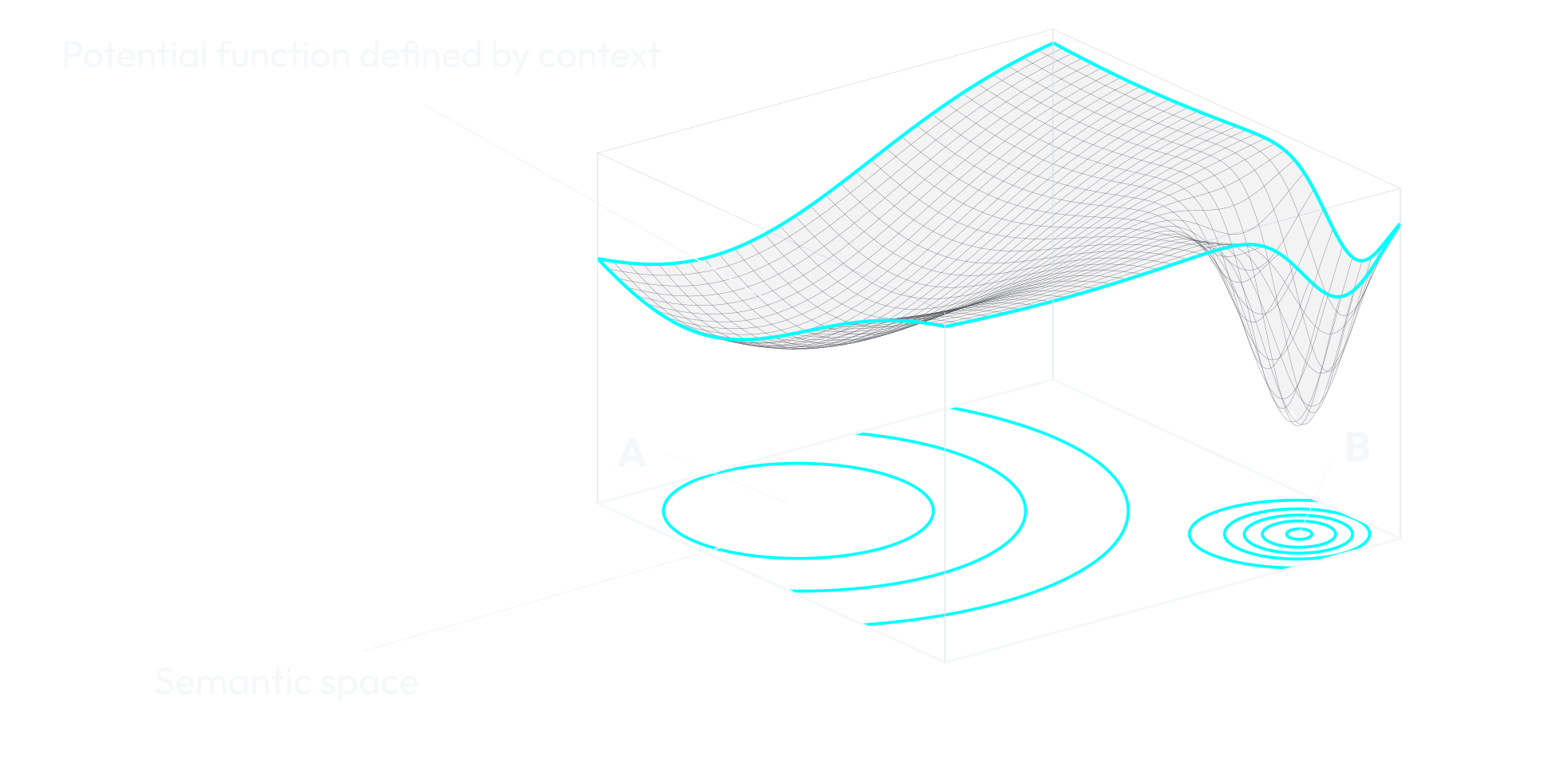
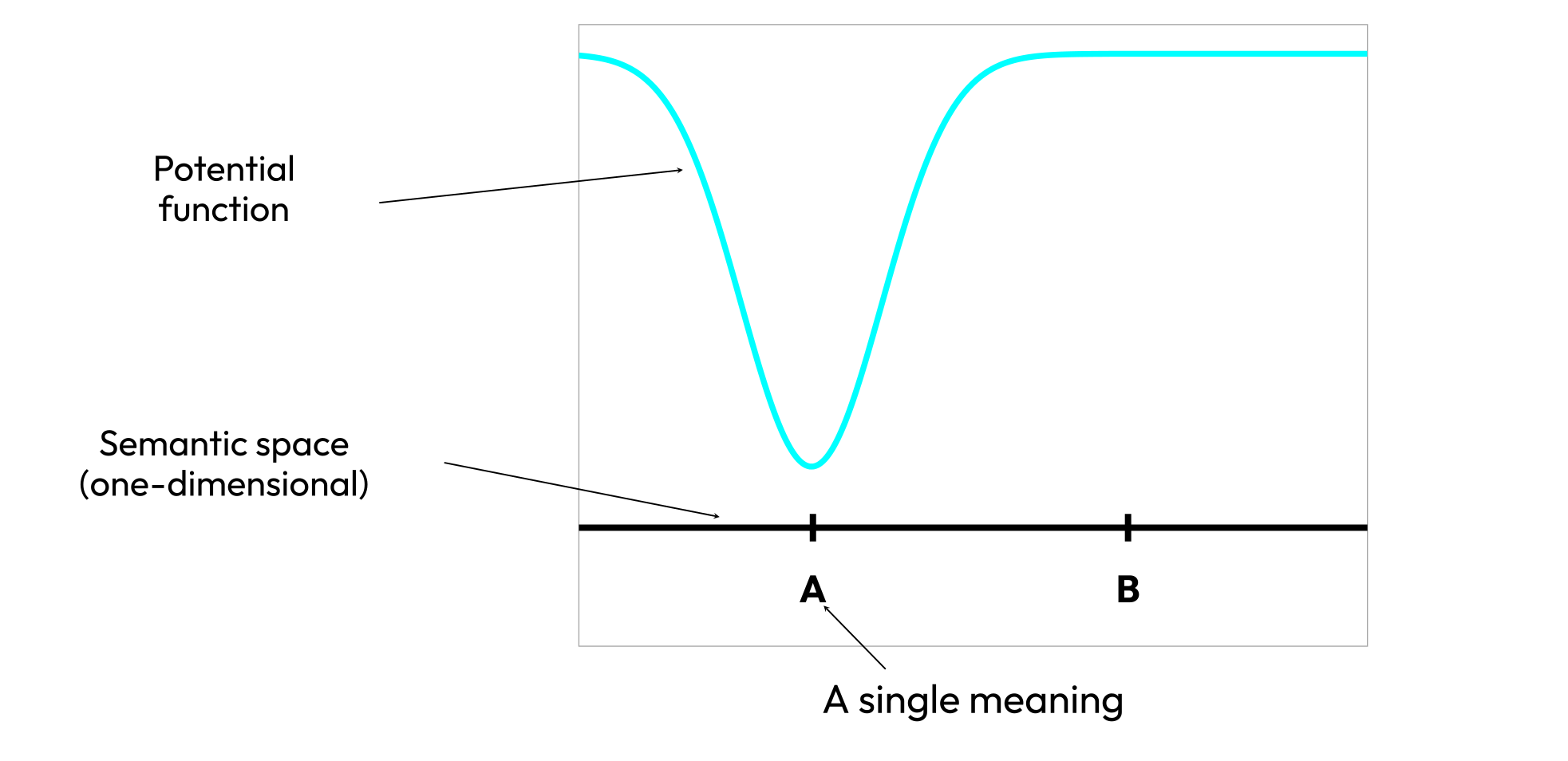
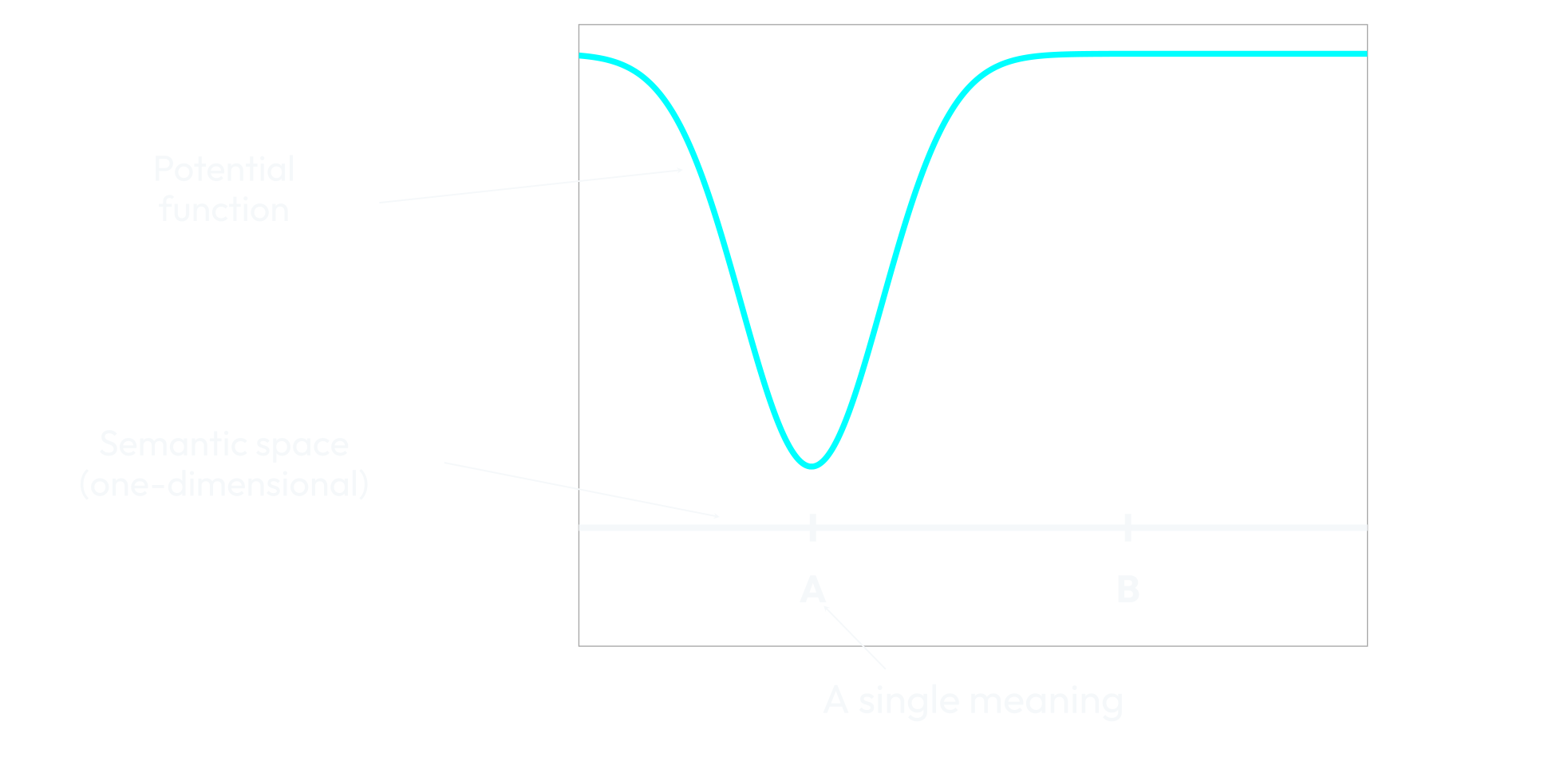
Three cases can arise in the construction of the meaning of words and linguistic expressions: precise meaning, ambiguity, or indetermination.
The semantic potential geometry contains one narrow dominant basin.
Several narrow basins remain strongly weighted.
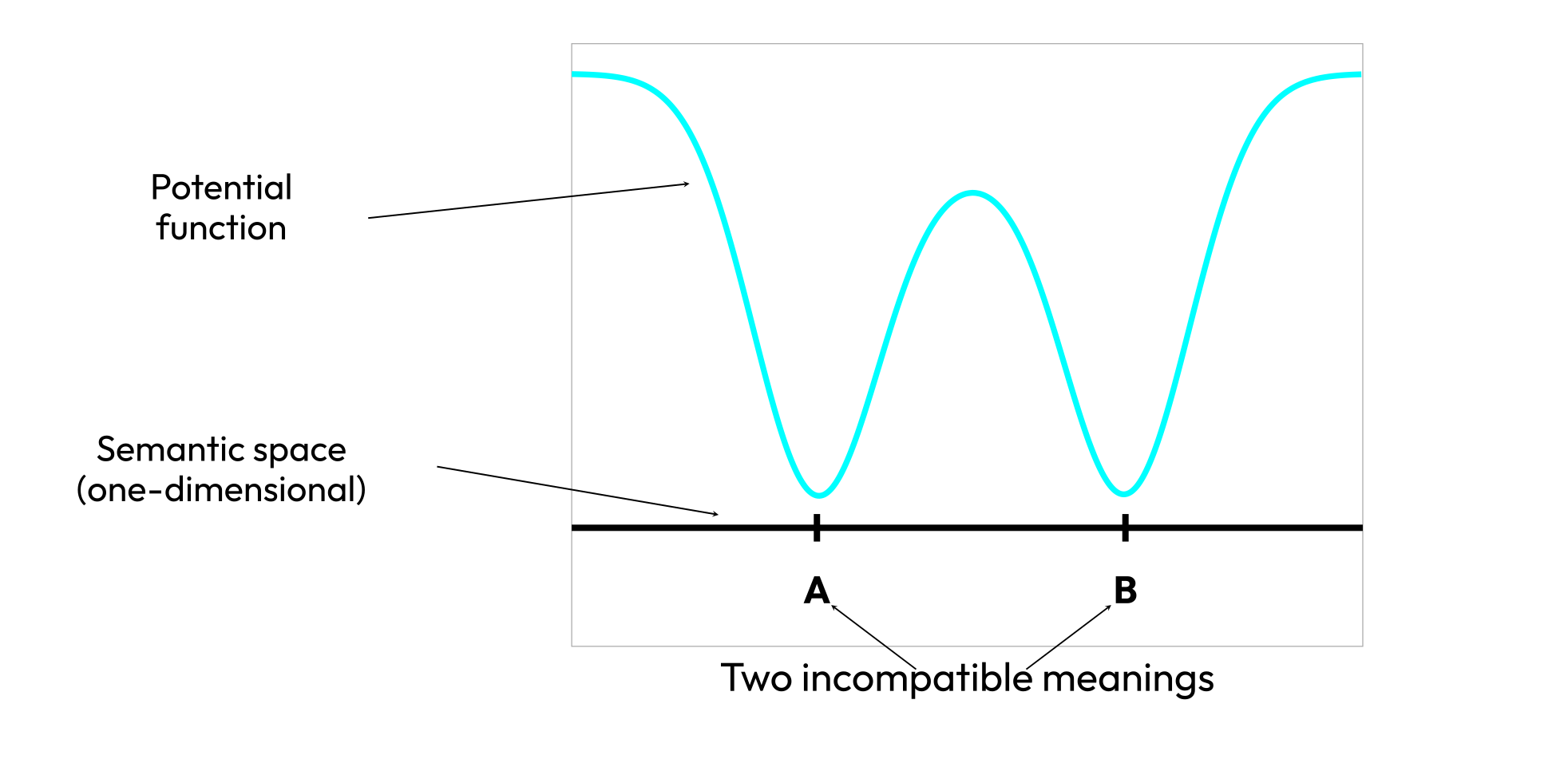
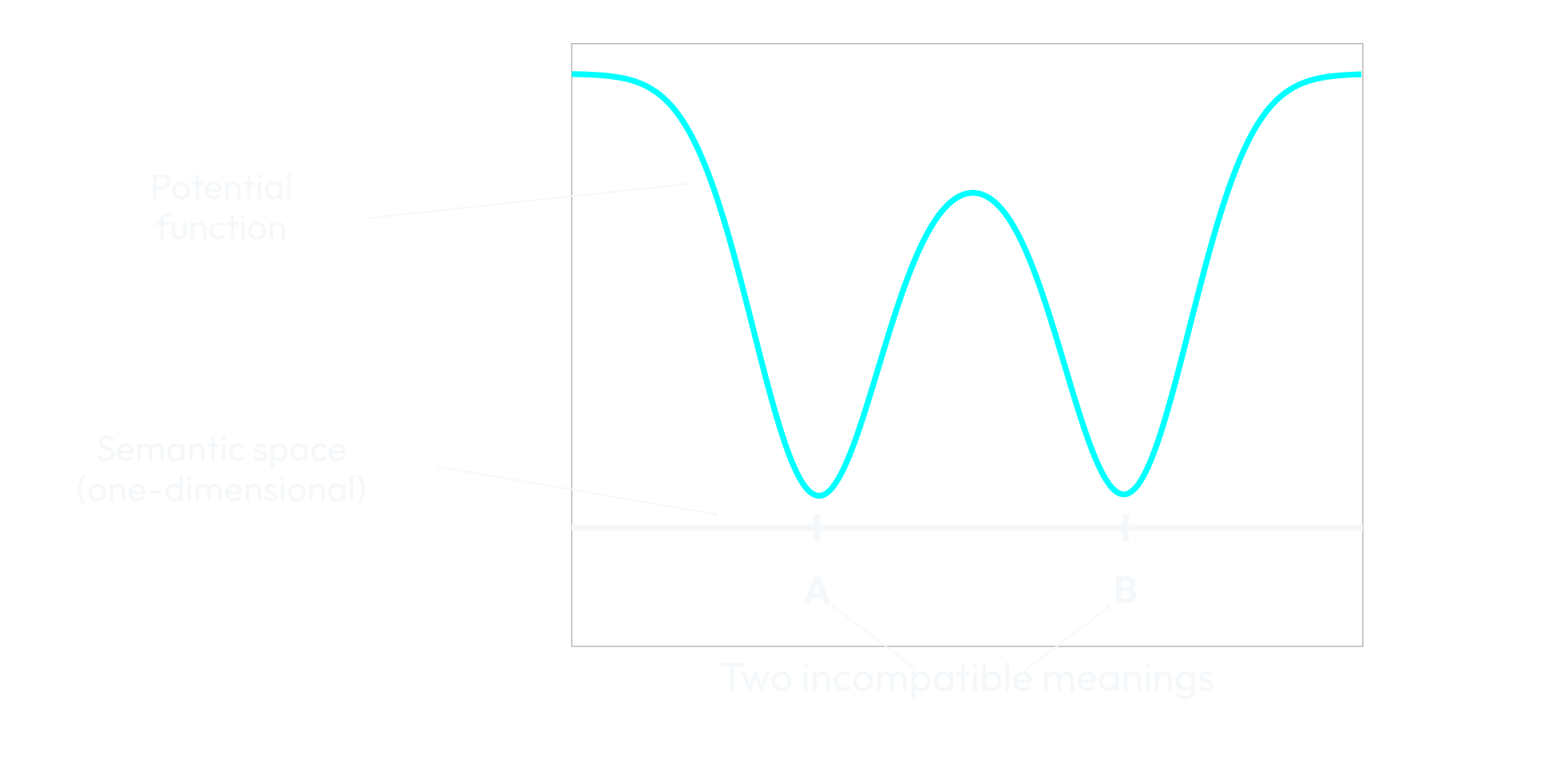
The semantic potential is unique and broad.
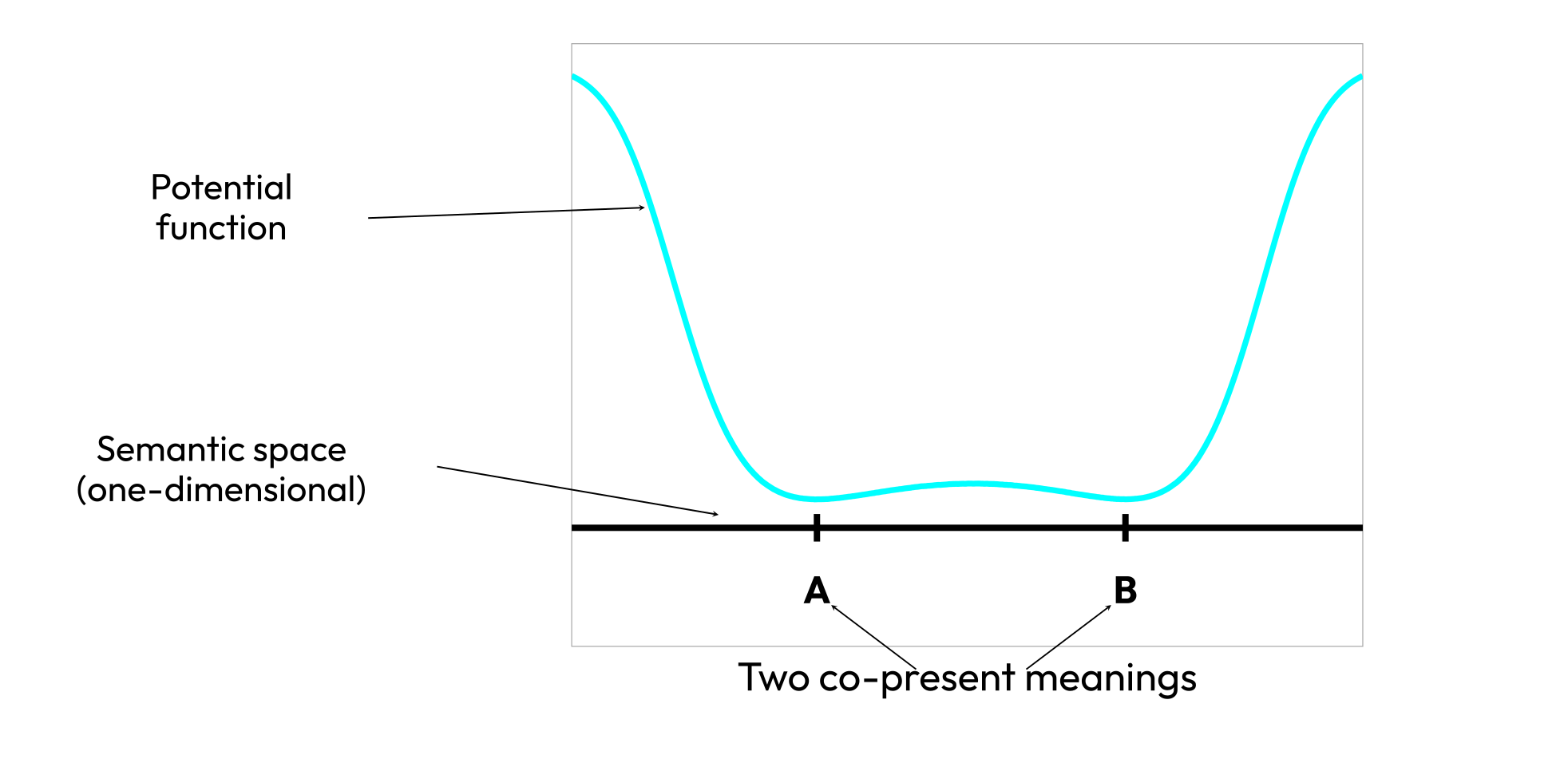
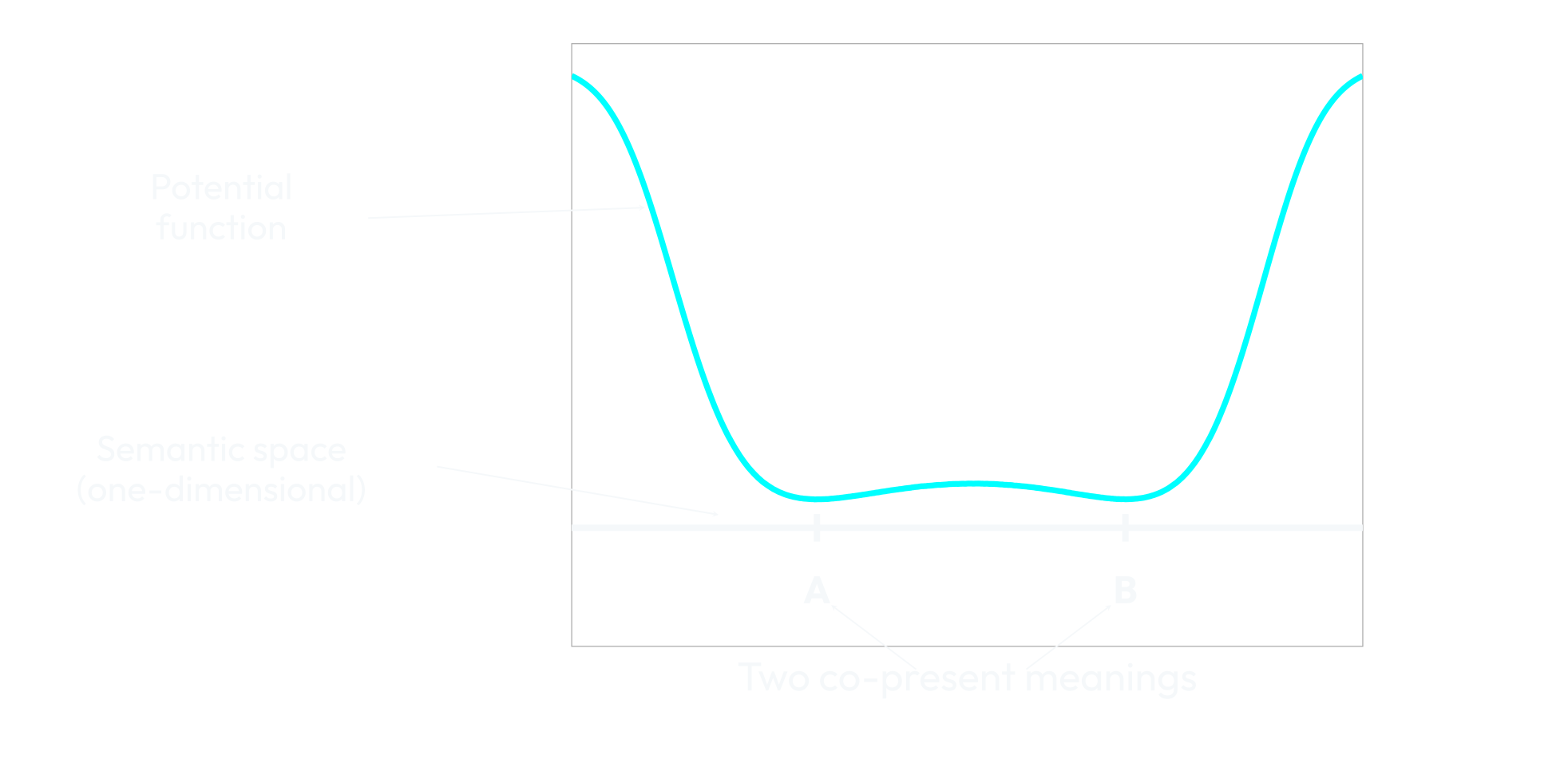
Misunderstanding therefore remains possible in non-verbal as well as verbal communication. When a speaker produces a trace, the listener constructs an interpretation from their own situated contextual history. The two constructions may overlap enough for communication to succeed, diverge slightly, or separate to the point of producing a misunderstanding.
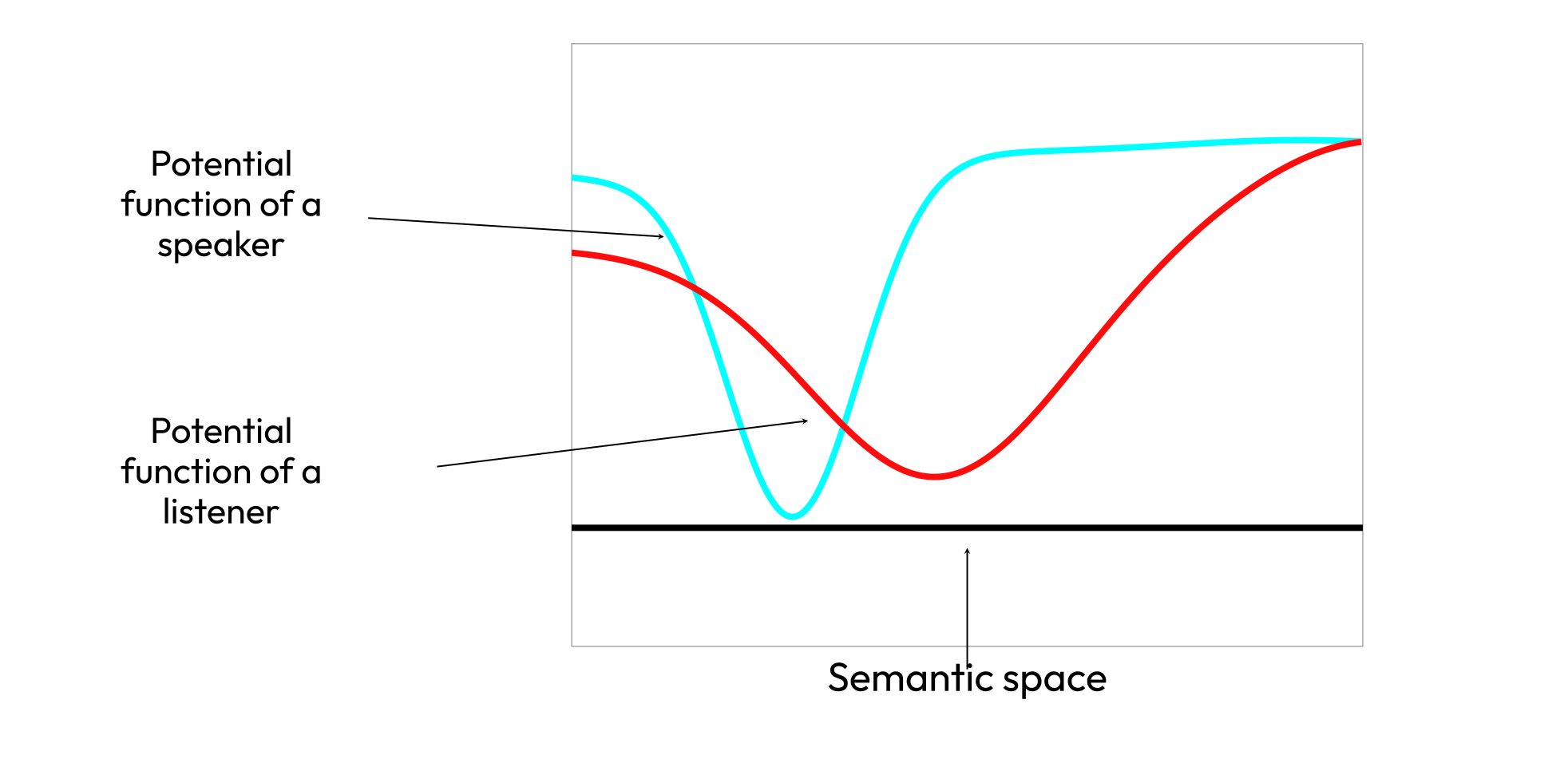
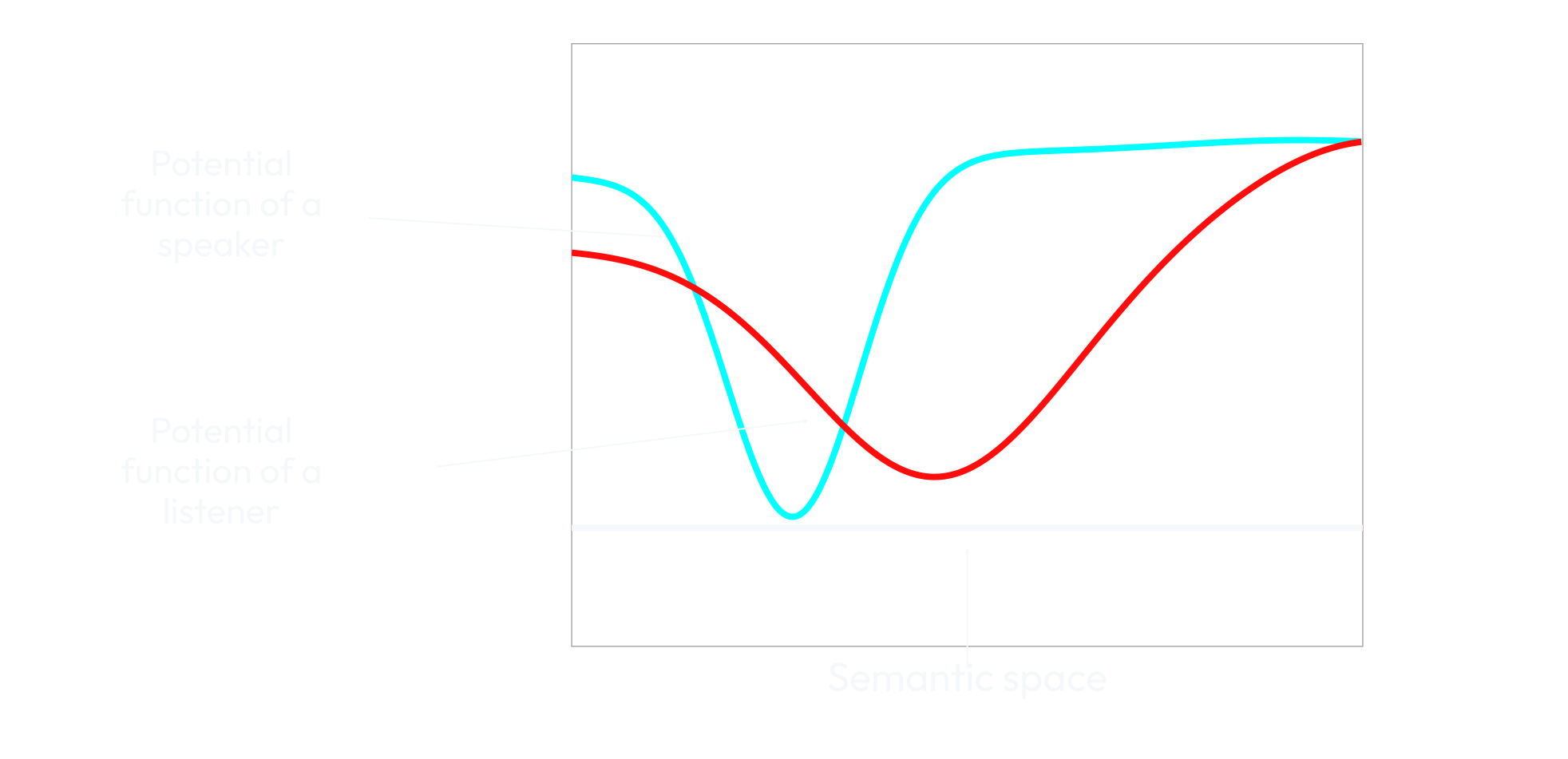
This typology is one of the most direct conceptual ancestors of GPM.
A system is a Geometric Potential Model if and only if three conditions hold jointly:
A trace x opens a declared structured space 𝓜ₓ of possible actualizations and induces an explicit structured potential 𝒫₀ over that space. An arbitrary hidden representation is not sufficient.
Context causally transforms the potential through a declared pathway.
Actualization depends causally on 𝒫_C. If the potential can be bypassed, destroyed, or replaced without systematically changing behavior, the system is not a GPM.
A system failing any one of these three conditions is not a GPM, regardless of the vocabulary used to describe it.
The first major difference concerns the primary mechanism of contextual computation. Contemporary LLMs are organized around attention: token representations query, weight, and aggregate other token representations. A GPM is organized around actualization: context deforms an explicit structured potential, and output is read from the resulting field.
Geometric structure already exists in conventional neural networks. GPM gives it a different architectural status: the current potential becomes an explicit state, shaped by context and causally necessary for actualization. Learned parameters specify how this state is constructed. The potential itself describes the current landscape of possible actualizations.
Latent representations: geometric structure may emerge in the activations
What structure has the network learned in its representation space?
Geometric potential: its morphology is a causal state of actualization
How is the space of possible actualizations structured and deformed by context?
LLMs are primarily trained to produce a distribution over continuations. In a GPM, probability may represent the potential or serve as its readout, and a sufficiently rich probabilistic latent model may encode distinct potential states. The causally mediating potential structure remains explicitly identifiable throughout the process.
is primarily trained to produce a distribution over continuations
What probability should be assigned to the different outputs?
requires an explicit potential geometry to play a causal role in actualization
What is the morphology of the possibilities from which this distribution arises?
Different potential states can lead to the same output probability. For example, an ambiguity between two distinct possibilities and diffuse indetermination can both produce a 50/50 split. Yet when new context arrives, they do not evolve in the same way. Output probability alone is therefore not enough to distinguish them. A GPM seeks to preserve this difference so that it remains explicit, causally active, and testable.
With fixed weights and a fully functional pathway that contains no sampling, a GPM is deterministic at inference: the same input follows the same internal trajectory and produces the same result. By contrast, LLM products commonly use stochastic decoding, allowing the same prompt to produce different continuations.
commonly samples from a next-token distribution
The same prompt may produce a different continuation
follows a reproducible state trajectory when inference and decoding are fixed
Same model version + same input → same result
Reproducibility becomes an execution contract. Fix the model version, runtime, initial state and decoding policy, and the complete trajectory — from the first potential state to the final readout — can be replayed step by step.
GPM organizes inference around an explicit potential geometry. Context deforms this geometry, the system settles into a structured state, and actualization is read from that state through a declared causal path. Transformer blocks and attention-derived routing play no role in this process.
Three questions make the landscape easier to read. Does the architecture contain classic softmax self-attention? Does it rely on associative K/V memory with a Q-like read? Does its mechanism descend architecturally from attention? Mathematical dualities may connect different operators while their computational paths remain fundamentally distinct.